


Blog
How Many SoftWave Sessions Will You Need? Setting Realistic Expectations
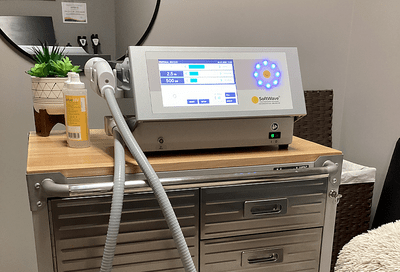
How Many SoftWave Sessions Will You Need? A Straight Answer for Roanoke Patients
It is the first question almost everyone asks, and it is a fair one. When people in Roanoke come to InnerSun Family Chiropractic asking about SoftWave TRT, one of the earliest questions Dr Wendy Brown hears is simple: how many sessions will this actually take? The honest answer is that there is no single number that fits everyone, but there is a realistic framework that helps you plan. This article walks you through what a typical course looks like, what shapes the exact number, and why the work your body does after the last session matters just as much as the sessions themselves.
SoftWave TRT (Tissue Regeneration Technology) is a non-invasive approach that uses broad-focused acoustic waves to reach deep into tissue and prompt the body's own natural healing response. There are no needles, no drugs, no surgery, and no downtime, and each session usually runs about 10 to 15 minutes. That short, comfortable format is part of why the question of "how many" comes up so often. When each visit is brief and easy, the plan becomes the thing that matters most.
What a Typical Course Looks Like
For most people, a course of SoftWave therapy is a series of sessions spread across roughly 6 to 8 weeks. It is not a single appointment and it is not an open-ended arrangement with no finish line in sight. Think of it as a defined stretch of consistent care, where you come in on a regular rhythm so the tissue receives repeated, cumulative signals to heal.
The reason it works as a series rather than a one-time fix is rooted in how the body actually repairs itself. Tissue regeneration unfolds over time. A single session can begin to stimulate the healing cascade, but lasting change comes from steady, repeated stimulation that keeps that cascade active while your body does the slower work of rebuilding. This is why consistency during those weeks tends to matter more than any one visit.
Why "6 to 8 Weeks" Is a Range, Not a Promise
That 6 to 8 week window is a general guideline, not a guarantee. Some people follow a plan that lands neatly inside it. Others may need a different pace based on what their provider observes along the way. The range exists because bodies are individual, and a good plan respects that rather than forcing everyone into the same mold.
What Determines Your Exact Number of Sessions
The specific number of sessions in your plan is individualized. During your initial consultation, Dr Wendy Brown evaluates several factors that together shape a realistic path forward. No two plans are built the same way, and that is a feature, not a flaw.
- The condition itself. Different tissues and different types of discomfort respond on different timelines. What you are dealing with is the starting point for the whole plan.
- How long it has been present. Something that has bothered you for many years often asks for more patience than something more recent. Long-standing issues have had time to settle in, and reversing that takes time as well.
- Severity. The degree of the problem influences how much stimulation the area may need and over how many visits.
- How your body responds. This is the factor that only reveals itself once you begin. Some bodies show signs of change early, others build more gradually. Your provider watches this closely and lets it inform the plan.
- Your overall health picture. General factors like activity level, other health conditions, and how well you support your body between visits all play a part.
Because these factors vary so much from person to person, the only responsible way to give you a real number is to evaluate you first. A consultation is what turns a general range into a plan that fits your situation.
How SoftWave Supports the Healing Process
Understanding what SoftWave is designed to do inside the body helps explain why it unfolds over a series of visits rather than all at once. The broad-focused acoustic waves are intended to trigger a cascade of natural repair signals. Here is the plain-language version of what that cascade involves.
- Stem cell activation: the therapy is designed to stimulate and mobilize your body's resident stem cells toward the treated area.
- New blood flow: it may support angiogenesis, the formation of new blood vessels, helping deliver what tissue needs to recover.
- Cell proliferation and collagen: signals associated with tissue building and collagen production may be encouraged.
- Inflammation modulation: the process is designed to help the body manage its own inflammatory response.
- Cellular housekeeping: mechanisms tied to clearing out worn, senescent cells may be supported.
Every one of these is a biological process that takes time. That is the core reason SoftWave is delivered as a series and why the benefits are not designed to arrive in a single dramatic moment. You are nudging your body to do real repair work, and real repair work has its own schedule.
Healing Continues After Your Last Session
Here is a point many patients find reassuring: your progress does not stop when the series ends. Because SoftWave works by activating your body's own healing response, that response keeps unfolding for weeks and sometimes months after your final visit. The sessions plant the signals, and your body continues to act on them well past the last appointment on the calendar.
This is why setting realistic expectations matters so much. If you measure success only by how you feel on the day of your last session, you may be judging the process before it has finished. Giving your body that additional stretch of time is part of the plan, not an afterthought.
If you are in Roanoke and you want a clear, individualized answer to how many sessions your situation may call for, request a SoftWave consultation at InnerSun Family Chiropractic and let Dr Wendy Brown evaluate your case in person.
How Progress Is Evaluated and the Plan Adjusted
A responsible SoftWave plan is not set in stone on day one. Your provider tracks how you are doing throughout the course and adjusts as the picture becomes clearer. That ongoing evaluation is a big part of what makes the therapy individualized rather than one-size-fits-all.
What a provider watches for
Dr Wendy Brown looks at how the treated area is responding over the weeks, how your comfort and function are changing, and how consistently the improvements are holding between visits. If your body is responding well, the plan may stay on its expected track. If progress is slower or faster than anticipated, the pace or number of sessions can be adjusted accordingly. This is a collaborative process, and your feedback at each visit is a genuine part of the data.
Setting Honest Expectations
The most important expectation to carry into SoftWave therapy is this: it is a process, not a single fix. It asks for a modest, consistent commitment over a defined stretch of weeks, followed by continued healing afterward. Many patients appreciate that this is a non-invasive path with no drugs and no downtime, but it still rewards patience. Results vary from person to person, no outcome can be guaranteed, and SoftWave is not a substitute for medical advice. A consultation determines whether you are a good candidate and what a realistic plan looks like for you.
Ready to Take the Next Step?
The clearest way to learn how many sessions your body may need is a one-on-one evaluation, where your condition, its history, and your goals all shape a plan built for you. Take that first step and get real answers rather than guesses.
Request your SoftWave Therapy new patient visit online today
Contact InnerSun Family Chiropractic
InnerSun Family Chiropractic
3555 Electric Rd Ste J
Roanoke, VA 24018
Phone: 540-315-4115
Our Main Office Website: https://innersunroanoke.com/
‹ Back





 3555 Electric Rd Ste J