


Blog
SoftWave Therapy vs Laser Therapy: Understanding the Difference
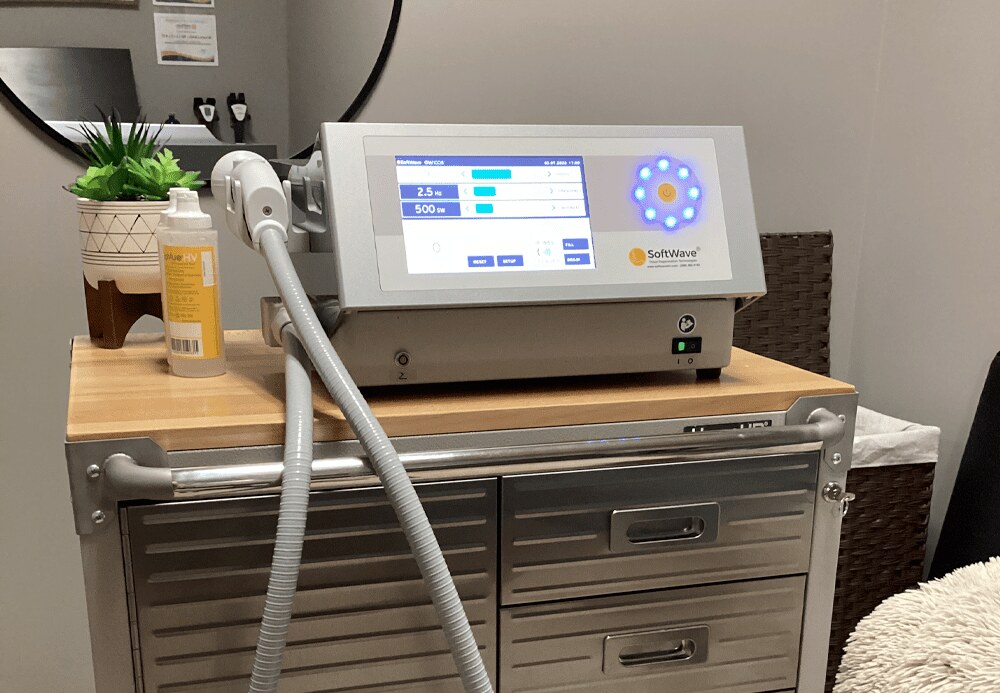
SoftWave Therapy vs Laser Therapy: What Roanoke Patients Should Know
If you have been researching non-invasive ways to address stubborn pain in Roanoke, you have probably run into two terms that sound similar but work very differently: SoftWave therapy and laser therapy. Both are drug-free, both avoid surgery, and both aim to support the body's own repair processes. Yet they use different forms of energy and reach the body in different ways. Understanding that difference can help you ask better questions and make a more informed choice. At InnerSun Family Chiropractic, Dr Wendy Brown helps patients sort through these options and considers SoftWave TRT as one approach for people looking to address the underlying source of discomfort rather than simply masking it.
This article walks through how each therapy works, how deep each one reaches, the conditions each is used for, and why a patient might lean toward one over the other. The goal is balance. Laser therapy is a legitimate, widely used tool. SoftWave is a different tool. Neither is a cure-all, and the right fit depends on your situation.
Two Different Kinds of Energy
The simplest way to understand the difference is to look at what each therapy actually delivers into the tissue.
Laser therapy uses light
Low-level laser therapy, sometimes called cold laser or photobiomodulation, delivers focused light energy into the body. That light is absorbed by cells and is designed to stimulate cellular activity, which may help support the repair of soft tissue and may help calm local inflammation. Because it relies on light, the effect tends to be strongest closer to the surface. Light energy scatters and is absorbed as it travels, so the deeper a target sits, the more the energy has already dispersed by the time it arrives. That makes laser a common choice for more superficial concerns.
SoftWave therapy uses acoustic pressure waves
SoftWave TRT works on a different principle. Instead of light, it uses broad-focused acoustic waves generated through an electrohydraulic, spark-based system and shaped by a patented parabolic reflector. SoftWave is the only broad-focused shockwave technology, which sets it apart from radial, electromagnetic, and piezoelectric devices. Rather than treating a narrow point, the broad-focused wave spreads mechanical energy across a wider zone of tissue and is designed to reach deeper structures. That pressure-based energy is what triggers the body's natural healing cascade.
Depth of Penetration and Why It Matters
Depth is one of the most practical differences between these therapies. Pain does not always live near the surface. A deep hip, a shoulder that aches with every reach, or chronic low back tension can involve tissue well below the skin. When the source is deep, a therapy that reaches deep has a more direct path to it.
SoftWave's acoustic waves are designed to travel through tissue and deliver energy at depth, which is part of why it is often considered for musculoskeletal complaints that have not responded to surface-level care. Laser light, by contrast, is generally more surface-oriented. That is not a weakness. It simply means the two therapies are suited to different jobs. For a superficial soft-tissue irritation, staying near the surface may be exactly what is needed. For a deeper joint or long-standing tension, deeper reach can be an advantage.
How SoftWave Helps the Body Repair Itself
What makes SoftWave interesting is not just that the wave reaches deep, but what happens once it does. The mechanical energy interacts with cells in a process called mechanotransduction, where a physical signal is converted into a biological response. In plain language, the wave gives the tissue a stimulus that the body reads as a call to repair.
- Stem cell activation: SoftWave is designed to activate and encourage the migration of the body's own resident stem cells toward the treated area.
- New blood vessel formation: Through signals such as VEGF and eNOS, the therapy supports angiogenesis, the growth of new blood vessels that carry oxygen and nutrients to tissue.
- Cell proliferation and collagen: Factors including PCNA and BMP are involved in cell growth and the building of collagen, a key structural component of healthy tissue.
- Inflammation modulation: Rather than simply shutting inflammation off, the therapy is designed to help the body regulate it, including through toll-like receptor pathways.
- Cellular housekeeping: SoftWave may support the clearance of senescent cells, older cells that no longer function well and can slow healing.
These are the mechanisms that make SoftWave a regenerative-minded approach. Laser therapy also acts at the cellular level through light absorption, but the pathway and depth of reach are different. Both work with your biology rather than around it, just through different doorways.
What Each Therapy Is Often Used For
Laser therapy is frequently applied to superficial soft-tissue concerns, localized inflammation, and surface wound healing support. SoftWave, with its deeper reach and regenerative signaling, is often considered for chronic and deeper musculoskeletal pain, connective tissue that needs activation, and areas where circulation is a factor. SoftWave carries FDA clearances for the activation of connective tissue, a temporary increase in blood flow, temporary relief of minor muscle and joint pain, treatment of chronic diabetic foot ulcers, and treatment of acute second-degree burns.
Many painful conditions could reasonably be approached with either tool, or with other care entirely. The overlap is real, which is why a hands-on evaluation matters more than a brochure. The technology is only useful when it is matched to the right person and the right problem.
Why Patients Sometimes Choose One Over the Other
Patients often gravitate toward SoftWave when their concern is deeper, more chronic, or has not improved with approaches that stayed near the surface. Others find laser therapy a comfortable fit for a more superficial or acute complaint. Preference, prior experience, the tissue involved, and how a body has responded to past care all play a role.
A SoftWave session itself is straightforward. It is non-invasive, with no needles, drugs, surgery, or downtime. Sessions usually run about 10 to 15 minutes, and a typical plan involves a series over roughly 6 to 8 weeks. Because the therapy is designed to prompt the body's own repair processes, healing can continue for weeks to months after the final session. Results vary from person to person, and a consultation determines whether you are a good candidate.
If you are in Roanoke and weighing SoftWave against laser therapy for a nagging or deeper pain concern, request a SoftWave consultation at InnerSun Family Chiropractic so Dr Wendy Brown can evaluate your situation.
Making a Confident Decision
The best therapy is the one matched to your body, your history, and the source of your pain. SoftWave TRT has been studied at leading institutions and is used by clinicians who work with professional and collegiate athletes. That said, no responsible provider can promise a specific outcome, and no single device is right for everyone. Comparing these therapies is not about which one wins in the abstract. It is about which one fits you.
Think of it this way. Laser therapy shines light energy that tends to work closer to the surface. SoftWave sends broad-focused acoustic waves deeper to trigger a repair cascade the body carries out on its own. Different energy, different depth, different jobs. A thorough evaluation turns that into a plan for your goals.
Ready to Take the Next Step?
If deeper or long-standing pain has kept you from the activities you love around Roanoke, a consultation can clarify whether SoftWave TRT is the right approach for you. Take the guesswork out of the decision and start with an honest evaluation.
Request your SoftWave Therapy new patient visit online today
Contact InnerSun Family Chiropractic
InnerSun Family Chiropractic
3555 Electric Rd Ste J
Roanoke, VA 24018
Phone: 540-315-4115
Our Main Office Website: https://innersunroanoke.com/
‹ Back





 3555 Electric Rd Ste J